about the author
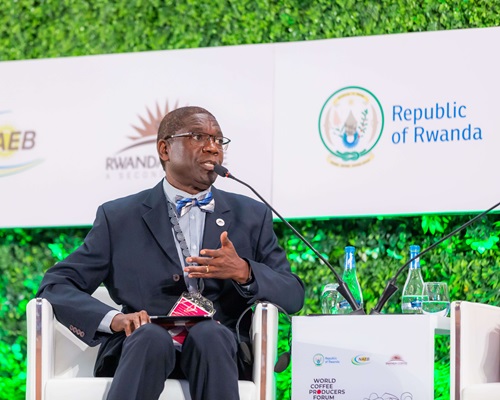
At the World Coffee Producer's Forum (WCPF) - Kigali, Rwanda
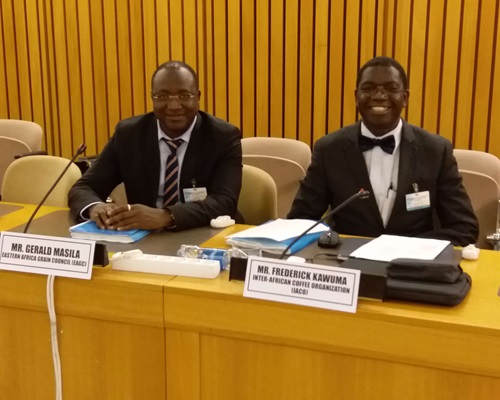
FRED KAWUMA, also known as the African Coffee Ambassador, is Secretary-General Emeritus of the Inter-African Coffee Organisation (IACO), and one of the founders of the World Coffee Producers Forum. He founded the African Fine Coffees Association and was its first Executive Director. He was also the founder of the Uganda Coffee Federation and one of the pioneers of the Uganda Coffee Development Authority (UCDA). Fred developed the concept of the African Fine Coffee Conference and Exhibition as an opportunity to link African producers and exporters with buyers and roasters globally, which he launched in Feb 2004. He is an experienced executive, consultant, coffee professional, and champion of coffee improvement systems from production through the value chain to the consumer. He has worked as a coffee expert in the public and private sectors in East and West Africa and the United States. Currently, he is the Chairman of Café Africa Uganda. He also serves on several local and international boards. He has been a CEO in different organisations. He has received awards for his work in coffee—a commendation from the US Congress in 2004, an Award of Coffee Excellence from H.E. the President of Uganda in 2017 as one of the pioneers of UCDA, and the AFCA Lifetime Achievement Award in 2018. He was appointed Goodwill Ambassador for African Coffee in November 2020. Fred holds a Bachelor of Commerce (Hons) in Marketing from Makerere University, an MA in Communication from Wheaton College, IL, USA, and a PhD in Entrepreneurial Leadership from Regent University, VA, USA. He can be reached at fkawuma@gmail.com or fredkaw@mail.regent.edu
my story
I was born on 17th January 1960, in Bulemezi (one of the old counties of Buganda) to a father who was a coffee farmer, the late Dick Sewava Nsereko. I do not remember my mother (the late Erivansoni Nsereko) doing much about the coffee except supervising our different chores. We cultivated much coffee, and my father hired casual labourers who weeded the farm. Family labour was involved in the harvesting, and I learned how to pick the coffee. Initially, I did not know how to do it properly, so I just stripped the branch, taking off ripe and unripe cherries. It was the quick way to get the job done. I remember being reprimanded, albeit gently and told that what I did was not good for the coffee tree. Much later, I learned why harvesting only the ripe cherries is essential. Later in life, I ended up in a coffee career, worked both in the public and private sectors in Uganda and internationally and got to understand the industry’s intricacies more and more. The experience I have had in my coffee career, spanning over 30 years, inspired the writing of the book, Is there poverty in your cup of coffee?
In the late 1980s, after completing my Master’s degree and initially working at Daystar University in Nairobi, Kenya, I returned to Uganda and worked as a Planning Economist in the Ministry of Cooperatives and Marketing (my doctoral studies later focused on entrepreneurial leadership in the coffee industry in Africa). After a while, I was assigned to the team that worked on a World Bank project to restructure agricultural marketing in Uganda. As civil servants, some of us worked as counterparts to international consultants on this project. The restructuring of the Coffee Marketing Board was a big priority for the government because of the delays in payment to coffee farmers due to inadequate crop finance to pay for all the coffee when delivered for export processing.
In 1991, I was seconded to serve in the Coffee Monitoring Unit (CMU) in the Agricultural Secretariat of the Bank of Uganda (the central bank) where I worked as the Coffee Budget Desk officer. The establishment of the CMU was integral to setting up the new industry regulatory agency known as the Uganda Coffee Development Authority (UCDA), of which I was one of the pioneers. Working in the UCDA was a very enriching professional experience as we developed systems to guide the liberalisation of the coffee industry in Uganda and developed data collection templates and reports still in use. In 1993, I was invited to join a team of African professionals working in the commodities sector, constituted by the International Trade Center (ITC), to prepare training materials and write case studies for training marketing managers in Africa. It was a rigorous exercise, and I was delighted that two of my cases were published in the ITC case book.
While at UCDA, I interacted with coffee processors and exporters and noted a significant knowledge gap in the industry and a great need to professionalise the sector. After five years of working in the public sector, I resigned and joined the private sector. I helped set up the Uganda Coffee Trade Federation (UCTF), which later transformed into the Uganda Coffee Federation. I established the UCTF secretariat and its services and sought to bring together the exporters to pursue a pre-competitive strategy that would work in their common interests. The secretariat coordinated policy dialogue, training, data collection and information sharing, and other critical areas. I facilitated the consultative process of developing common positions by the exporters to present to the government, which helped the industry address various policy issues. I had a hand in developing the self-regulatory mechanisms that the private sector could use to ensure discipline within their ranks and an arbitration system for resolving disputes in the industry. UCTF’s arbitration system was before Uganda had developed the general legal structure for alternative dispute resolution. UCTF also played a significant role in developing a warehouse receipt system in Uganda and worked with the World Bank in training on risk management for coffee exporters.
It was also critical to have training for the proprietors and staff of the coffee exporting companies to build capacity in running of their business. I sought technical assistance that enabled us to train in-country and abroad. The training included the then-famous London Coffee Course, where with support from the EU, we had contingents of coffee people travel to London for this course. The course was significant in introducing exporters to an understanding of the operations of the global coffee business. Visits to coffee buyers and the London Commodity Exchange augmented the theory sessions, helping the exporters to practically understand international coffee trading, the price-setting mechanisms and different approaches to risk management. We also obtained support from the Commonwealth Fund for Technical Cooperation, which helped build the capacity of the UCTF secretariat. UCTF pioneered private sector efforts in promoting Uganda coffee in the USA and European markets, including conducting the first Internet-linked coffee tasting session by coffee experts in Kampala and Washington DC in September 1996 of the same samples of coffee and comparing notes electronically. The Uganda and US press covered the event, providing positive vibes for Uganda coffee. This happened at the time when the first Coffee and Migratory Bird Conference was convened by the Smithsonian Society at the Washington Zoo, Washington DC, leading to the origins of the certification label of Migratory Bird-friendly coffee. I was also glad to have been a part of the landmark event.
My work with UCTF was in the mid-to-late 1990s, and I was in my 30s and full of energy. The UCTF experience prepared me well for greater leadership responsibilities in my career. Challenges notwithstanding, in general, Uganda’s liberalisation of the coffee industry was noted by development partners and others to be exemplary, with frequent invitations to both UCDA and UCTF to share Uganda’s experience in many African and global forums. From 1995, I was part of the Uganda delegation to the meetings of the International Coffee Council of ICO as a private sector representative, and I was able to develop relationships with many coffee luminaries.
UCTF recognised the significance of wild coffee in Uganda, taking note of the government’s effort to protect the remaining wild coffee in the Kibale forest in western Uganda, gazetting it as a national park. UCTF worked closely with the Uganda Wildlife Authority (UWA) and Makerere University Institute of Environment and Natural Resources (MUIENR) to develop a community conservation project for communities around the Kibale National Park. The Makerere University Institute of Environment and Natural Resources (MUIENR) was established in 1988 in response to increasing concern by the government of Uganda and the university about environmental degradation in the country with a mandate to promote the development of knowledge, skills and positive attitudes for sustainable management of the ecosystem and natural resources through training and research. The university established a field station, Makerere University Biological Field Station (MUBFS), within the national park to collect data and provide reports on various trends. Much research was undertaken on Kibale’s wild coffee. Given that Uganda is the epicenter of the origin of Robusta coffee, UCTF was proud to be associated with the efforts to conserve Uganda’s wild varieties.
In February of 1999, I was appointed to serve as one of the members of the board of advisors for the International Task Force on Commodity Risk Management, whose secretariat was at the World Bank headquarters in Washington DC. We had several meetings in Africa, Europe and the USA in the quest to obtain information on the challenges faced by coffee producers, the practices and approaches in mitigating risks in international commodity trading and how these could be adapted for use in low-income coffee-producing countries. This also led to my stint as a consultant coffee expert with the World Bank at the headquarters. I joined a team at the bank that was developing the appropriate instruments for commodity risk management and identifying partners who could help roll out services in developing countries.
From 2004, I was part of the team that held a series of consultative meetings and workshops in developing the Common Code for the Coffee Community, also known as the 4Cs. Funding from the German and Swiss governments played a critical role in supporting the consultations in developing the 4Cs. The 4C evolved into the 4C Association as a membership organisation. Finally, it led to the creation of the Global Coffee Platform (GCP) as its successor in continuing to develop the Code and facilitating the global dialogue on coffee sustainability. I am now a member of the GCP and continue to play a role in influencing the global coffee sustainability agenda.
After establishing EAFCA, while I continued to serve as a board member, I handed over its leadership to a new team, set up my own coffee company, and concentrated on a consulting career with ACLAIM Africa Limited, where I served as its CEO. However, not too long after that, I was called upon by the government of Uganda to consider a nomination to run for the office of the Secretary General of the Inter-African Coffee Organisation (IACO), which I accepted after prayerful consideration. I was elected and subsequently took office as Secretary General in January 2013 at the IACO headquarters in Abidjan, Côte d’Ivoire. At IACO, we undertook several reforms to transform the organisation and spearhead a new agreement that would bring African coffee-producing and consuming countries under one entity. As an inter-governmental organisation, it did not have a private sector focus. Thus, during my term in office, we endeavoured to engage the private sector proactively and involve them in an annual coffee symposium (which we launched in November 2013), where they would actively contribute to discussing Africa’s coffee policy agenda. Having retired from IACO and been nominated as a goodwill ambassador for African coffee by the IACO’s 60th Annual General Assembly of 2020, I look back with thanks to God for enabling me to contribute to the coffee industry at national, regional and international levels.
I have travelled to so many countries of the world, and I have seen the status of producers in the different regions. I also visited many parts of the developed world where coffee is consumed and have attended coffee meetings in many countries. The plight of consumers has been common talk in every producing country, and I decided to gather my thoughts and put them in a book. This book is Is There Poverty in Your Cup of Coffee? Feedback is appreciated and can be sent to info@fredkawuma.com